Brand Sheet · KOB-BS-02 · 2026
Lockbox for
UNINA
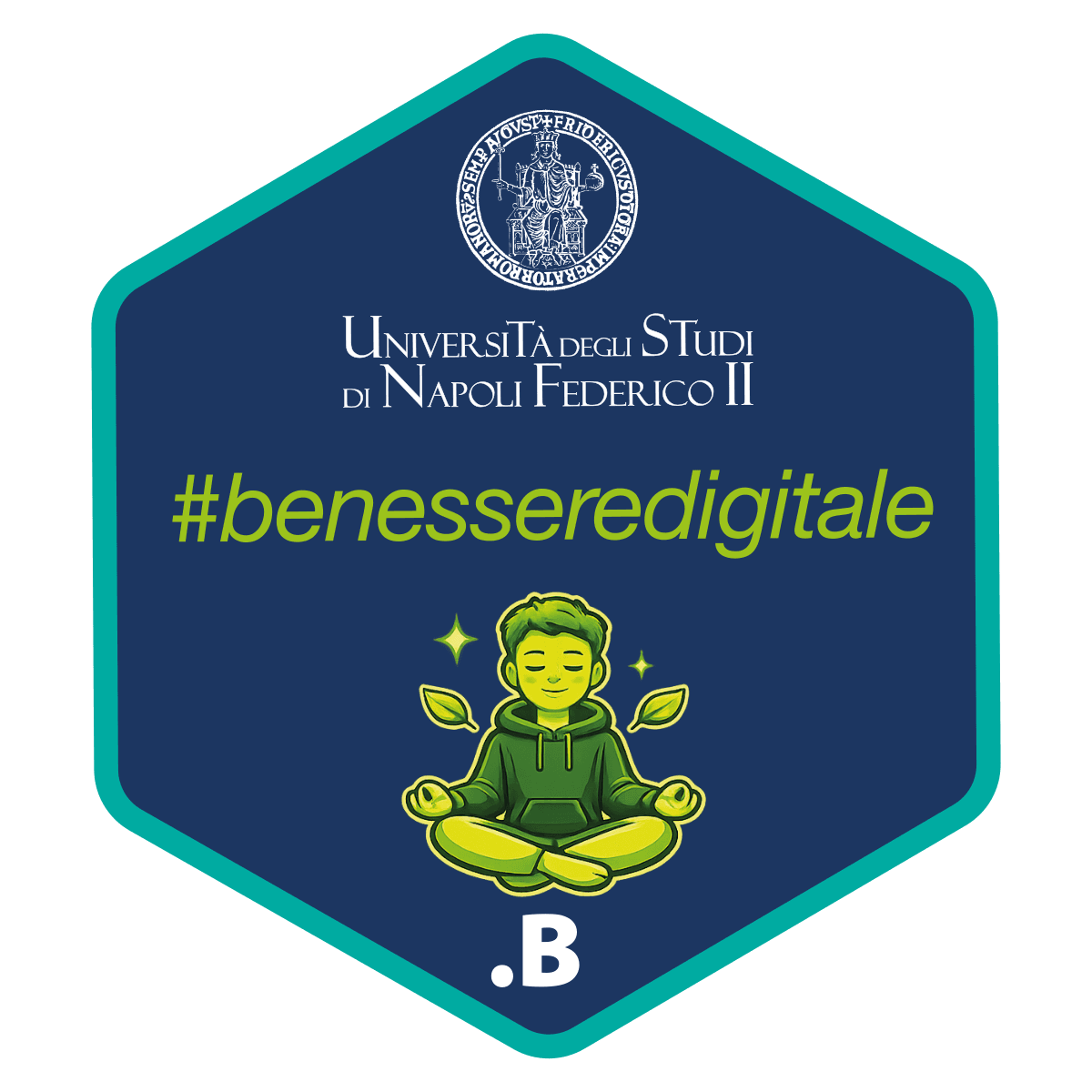
The University of Naples Federico II launched an experimental programme on student digital wellbeing: the adoption of Lockbox, an app developed by an Italian start-up, to manage digital distractions during study. The programme included an OpenBadge certification for participating students.
The project's scaffolding was already strong. What was missing was the language to say it.
Scroll horizontally · six signs of wellbeing






The system had to hold together two marks different in nature and language. On one side Federico II University, eight hundred years of history, seal, marbles, declared Latin. On the other Lockbox, a contemporary app with Gen Z vocabulary and screen aesthetics.
Our responsibility was to build a third voice: a project identity that was neither the institution in disguise, nor the brand-app applied to an academic context. Its own voice, recognisable, able to speak to students without betraying the university's solemnity.
The coordination of the two brands: a third sign — a hexagon recalling the shape of a lock and a beehive, with the initial «.B» as a silent signature of wellbeing — able to coexist with the university's seal without replacing it nor hiding.
The editorial architecture: the message organised on four layers, so each addressee could enter through their own. A diagnosis the student recognises («just a second, and two hours had passed»), a promised benefit, a simple procedure, an official recognition.
The visual language: a scene illustration showing what literally happens when the brain gets distracted — an educational keyframe that becomes a recognisable signature of the campaign.
Click on a swatch to copy the HEX.
Palette extracted from the Lockbox visual system: primary blue, turquoise and lime green as secondaries. CMYK and Pantone calculated as approximations from RGB values.
The communication system was declined through a coherent family of applications, each designed for a specific touchpoint of the student journey. The digital brochure is the keystone document: it carries the diagnosis, the benefit, the procedure and the recognition.
The double-sided bookmarks translate the same content into a pocket-mnemonic format: one institutional side (blue, with the functional claim «Unplug. Study. Unlock rewards.»), one operational side (green, with the quick instructions to activate Lockbox).
Rollups, posters, hall set-up, social, OpenBadge: every support enters the same grammar, not the same template applied to all.
Scroll horizontally →

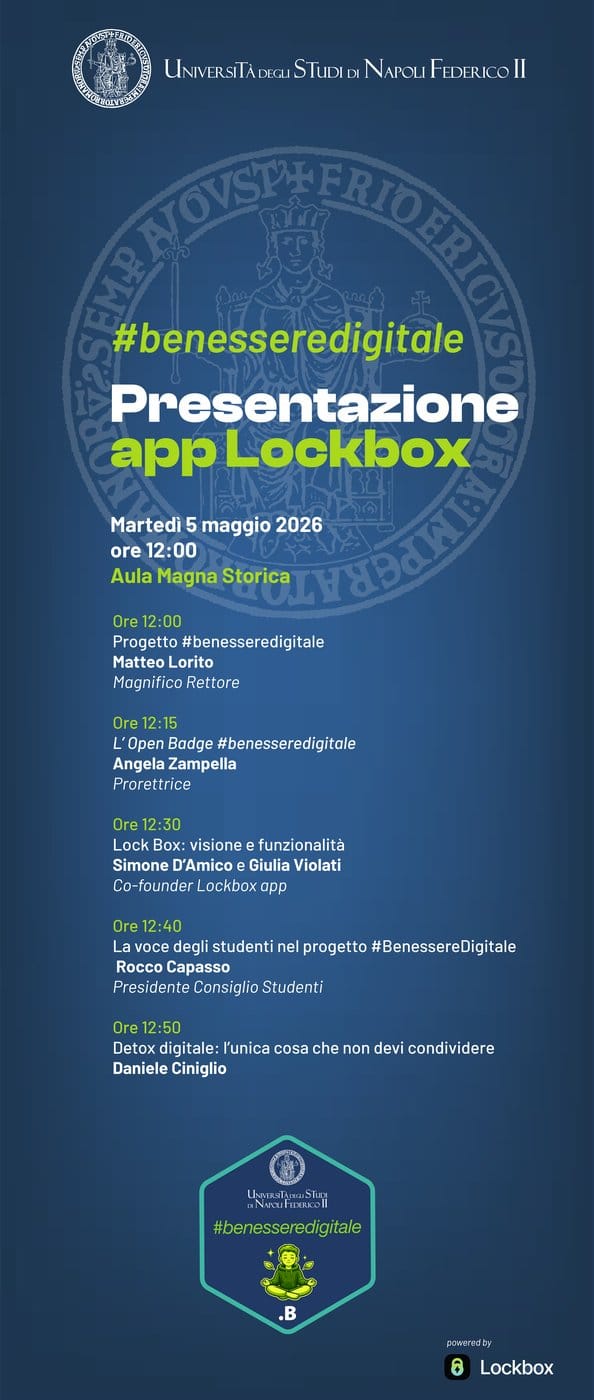


The system was presented on 5 May 2026 in the historic Aula Magna of Federico II, in Corso Umberto I. Opening by Rector Matteo Lorito, contribution by Vice-Rector Angela Zampella on the OpenBadge, presentation of Lockbox.
The event filled a packed and diverse hall: academic authorities, military representatives, press, and — above all — the students, to whom the whole system was designed to speak.
A project identity, when it really works, does one thing only: it disappears. It becomes the natural way an initiative speaks of itself.
Let's talk about your project.
Let's talk